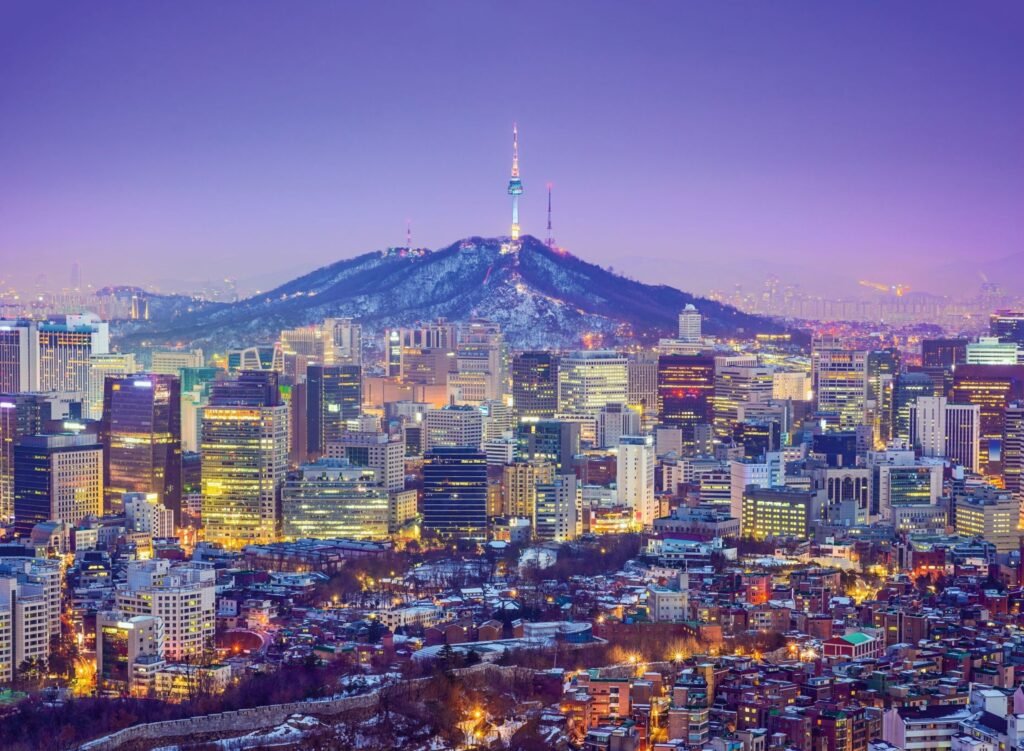
South Korea blends lightning-fast cities, ancient palaces, volcanic islands, and picturesque coastlines into one compact country that’s easy to explore. Whether you’re hunting K-drama shooting locations, craving seafood at a seaside market, or chasing sunrise on a volcanic peak, this guide covers the top 10 attractions you must visit, with practical tips, an easy comparison table, and FAQs to plan your trip like a pro. (Source: Korea Tourism Organization; Lonely Planet.) VISITKOREA – Imagine Your Korea
Quick list — the Top 10 (at a glance)
- Gyeongbokgung Palace, Seoul
- Bukchon Hanok Village & Insadong, Seoul
- N Seoul Tower (Namsan), Seoul
- Myeongdong / Hongdae (shopping & street food), Seoul
- Seongsan Ilchulbong (Sunrise Peak), Jeju Island
- Hallasan National Park, Jeju Island
- Haeundae Beach & Gamcheon Culture Village, Busan
- Gyeongju — Bulguksa Temple & UNESCO sites
- DMZ / Panmunjom (Korean Demilitarized Zone) — guided visit
- Andong Hahoe Folk Village / Jirisan or other cultural & nature sites
This guide will deep-dive each destination, tell you why it’s special, best time to visit, how long to stay, ticket info and insider tips.
How I picked these top 10
The list is compiled from official tourism guides and leading travel publications, prioritizing:
- cultural and historical significance (palaces, temples, UNESCO sites),
- unique natural features (volcanic cones, beaches, mountains),
- accessibility for international travellers, and
- traveler popularity and reviews. For authoritative listings see Korea Tourism Organization and Lonely Planet. VISITKOREA – Imagine Your Korea
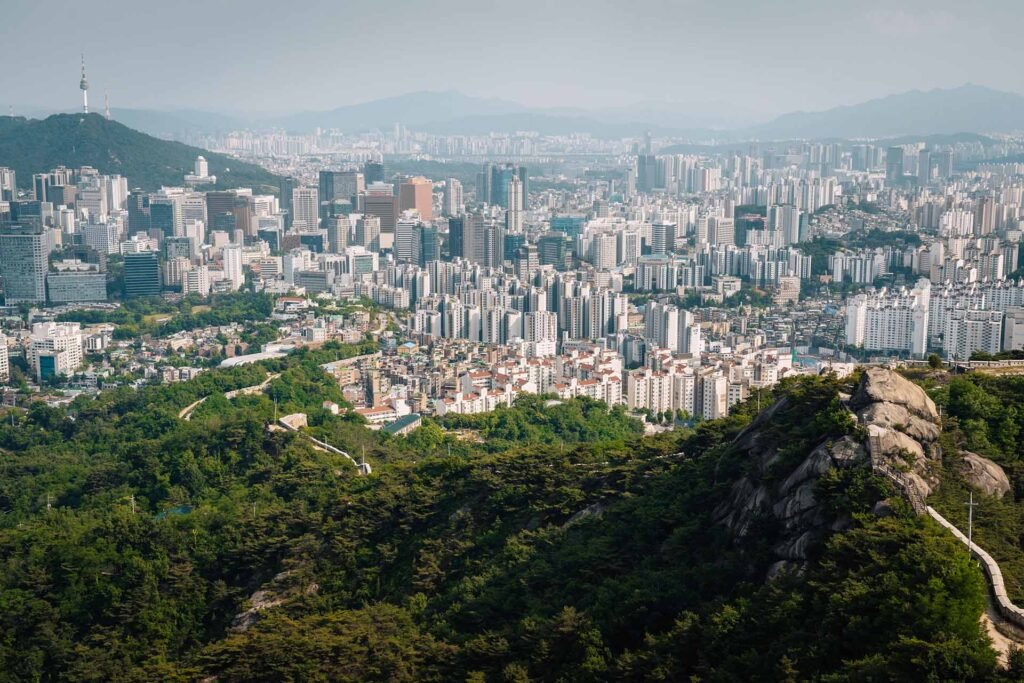
Comparison table — quick practical overview
| Attraction | City / Area | Best time to visit | Recommended stay | Entry fee (approx.) | Why go |
|---|---|---|---|---|---|
| Gyeongbokgung Palace | Seoul (Jongno) | Spring (Apr–May), Autumn (Sep–Nov) | 2–3 hours | ~KRW 3,000–4,000 | Iconic Joseon palace, royal architecture, changing of the guard. Royal Cultural Heritage Administration |
| Bukchon Hanok + Insadong | Seoul | Year-round (best in spring/autumn) | 2–4 hours | Free (some museums fee) | Traditional hanok streets, tea houses, craft shops |
| N Seoul Tower (Namsan) | Seoul | Clear days — sunrise/sunset | 1–2 hours | Tower observatory fee varies | Panoramic city views, locks & cafes |
| Myeongdong / Hongdae | Seoul | Year-round (evenings great) | Evening–half day | Free (shopping) | Street food, nightlife, K-beauty, youth culture |
| Seongsan Ilchulbong (Sunrise Peak) | Jeju | Sunrise — spring/autumn | 2–4 hours | KRW ~4,000–5,000 (varies). VISITKOREA – Imagine Your Korea | |
| Hallasan NP | Jeju | Spring–autumn (check trail conditions) | Half day–full day | National park access free; some permits for summit | Korea’s highest peak, crater views, alpine flora |
| Haeundae Beach + Gamcheon | Busan | Summer (Jun–Aug) & mild shoulder seasons | Half day–1 day | Beach free; museums/parks vary | Urban beach, seafood markets, colorful hillside village |
| Bulguksa Temple (Gyeongju) | Gyeongju | Spring / Autumn | 2–3 hours | Small entrance fee for Bulguksa | UNESCO-listed temple, Silla dynasty art & architecture |
| DMZ / Panmunjom | Near Seoul | Year-round (book in advance) | Half day–full day | Tour fee (mandatory guided tours) | Unique geopolitical experience — tension & history |
| Andong Hahoe Village | Andong | Autumn festival season, spring | 2–4 hours | Small admission to folk village | Preserved traditional village, cultural performances |
Notes: Fees and opening hours change — always confirm locally or via VisitKorea before planning. VISITKOREA – Imagine Your Korea
1) Gyeongbokgung Palace — Seoul’s royal heart
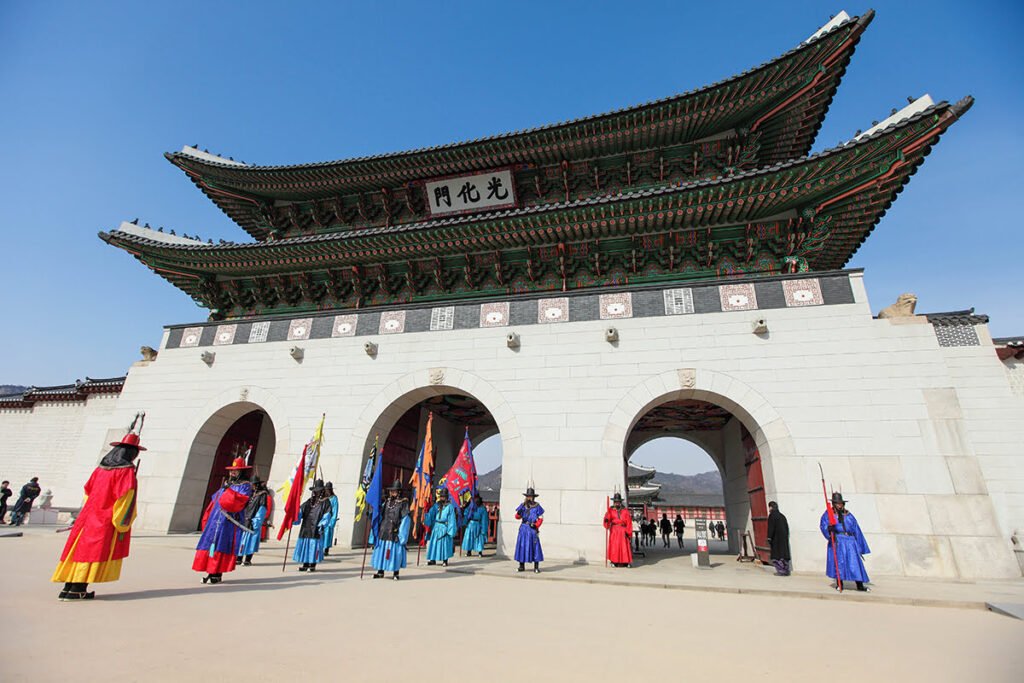
Why visit: Gyeongbokgung was the main palace of the Joseon dynasty (est. 1395). Its grandiose architecture, wide courtyards, and the National Folk Museum on the grounds make it an essential stop to understand Korea’s royal past. The changing of the royal guard ceremony is tourist-friendly and photogenic. Royal Cultural Heritage Administration
Top tips
- Rent a hanbok (traditional dress) nearby — admission is often discounted or free if you wear a hanbok.
- Aim to visit early morning to avoid crowds; evening illuminations happen on select dates.
- Combine this with a walk to Gwanghwamun Square and the nearby National Museum.
How long: 2–3 hours recommended.
Accessibility: Central Seoul; easily reached by subway (Gyeongbokgung Station / Gwanghwamun area).
2) Bukchon Hanok Village & Insadong — feel traditional Seoul
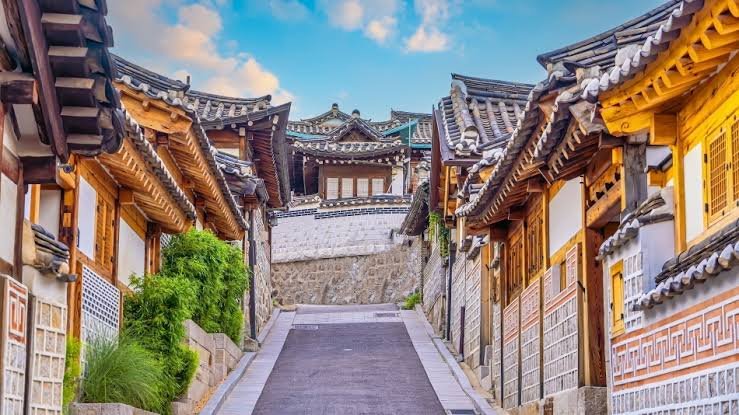
Why visit: Bukchon Hanok Village is a living neighborhood of restored traditional Korean houses (hanok). Wander narrow lanes, peek into pottery shops and tea houses. Insadong, nearby, hosts galleries, antique stores and street food. This area is perfect for culture lovers and photographers.
Top tips
- Respect residents — stay on public paths and avoid noise.
- Stop at a teahouse for traditional Korean tea and sweets.
- You’ll find excellent souvenirs and higher-end crafts in Insadong.
How long: 2–4 hours combined.
3) N Seoul Tower (Namsan) — panoramic Seoul
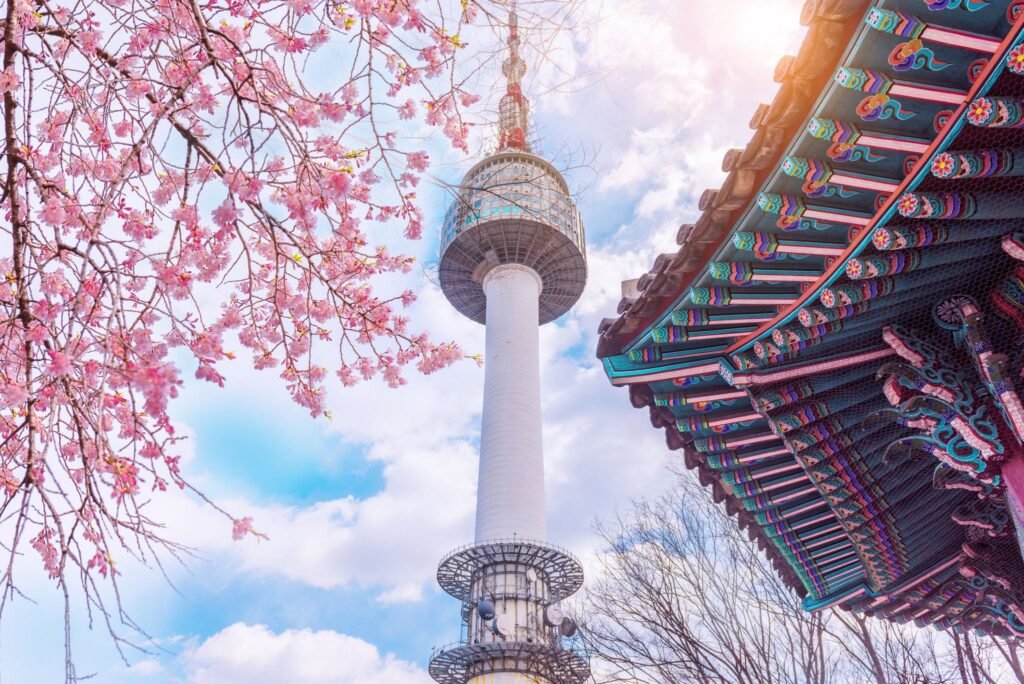
Why visit: For 360° skyline panoramas of Seoul (especially dramatic at sunset), N Seoul Tower is the go-to spot. The tower area features observation decks, restaurants and the famous “love locks” fence.
Top tips
- Take the Namsan cable car or walk the scenic trails up Namsan Mountain.
- Sunset-to-night transition gives the best photos — arrive early for a good viewing spot.
4) Myeongdong & Hongdae — shopping, street food, nightlife
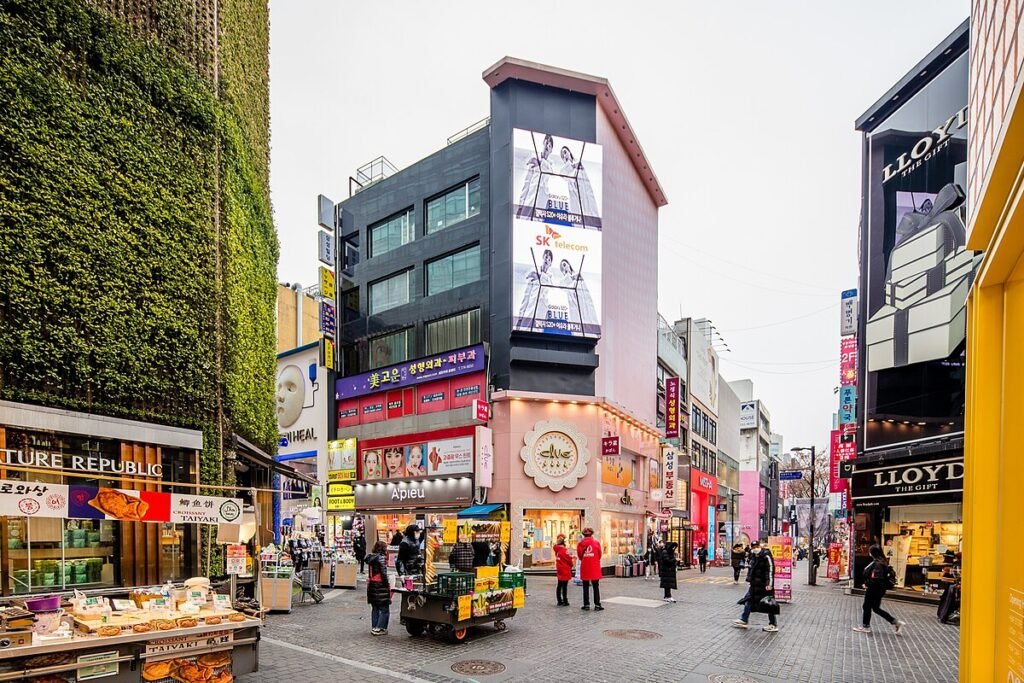
Why visit: Myeongdong is Seoul’s bustling shopping and street-food district; Hongdae is youthful, artsy and full of live music, clubs and indie boutiques. Together they show modern Korean urban culture — K-beauty, K-pop vibes and delicious late-night eats.
Top tips
- Try popular street foods: tteokbokki (spicy rice cake), hotteok (sweet pancake), skewers and tornado potatoes.
- Bargain and tax-refund tips: many stores offer tax refunds for tourists (minimum purchase applies).
5) Seongsan Ilchulbong (Sunrise Peak) — Jeju Island’s sunrise crater
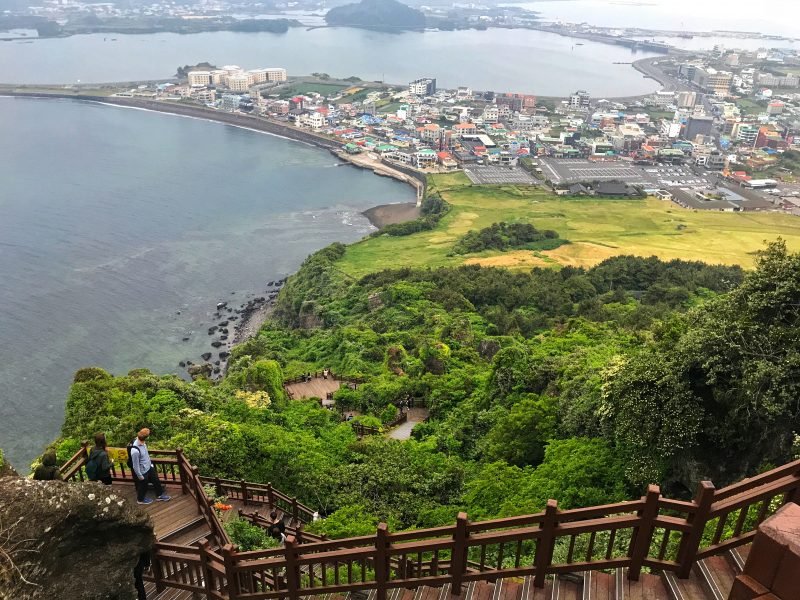
Why visit: Seongsan Ilchulbong is a dramatic volcanic tuff cone on Jeju’s east coast famed for its sunrise views, coastal cliffs and ecological value. It’s UNESCO-listed as part of Jeju’s volcanic heritage. Well-maintained trails lead to the peak for panoramic sunrise watching. VISITKOREA – Imagine Your Korea
Top tips
- If you can, watch the sunrise — the lighting is unforgettable. Trails can open early; check local hours. VISITKOREA – Imagine Your Korea
- Wear sturdy shoes — the trail is steep in parts.
- Combine with Jeju seafood and nearby attractions (Udo island ferry, Manjanggul Cave).
How long: 2–4 hours including travel and exploring.
6) Hallasan National Park — summit Korea’s highest mountain
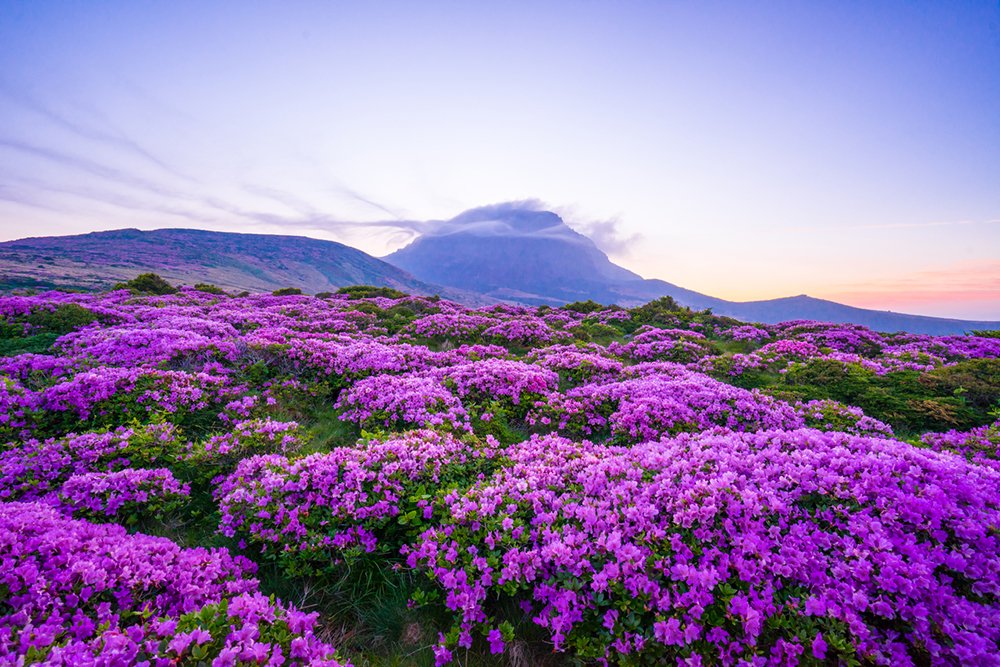
Why visit: Hallasan dominates Jeju and is South Korea’s highest mountain. It’s a biodiversity hotspot with crater lakes, alpine plants and varied trails from moderate day hikes to challenging summit treks.
Top tips
- Choose your trail wisely (Seongpanak and Gwaneumsa are common summit routes).
- Check trail openings and weather — summit hikes often require a full day and permit windows vary seasonally.
7) Busan — Haeundae Beach & Gamcheon Culture Village
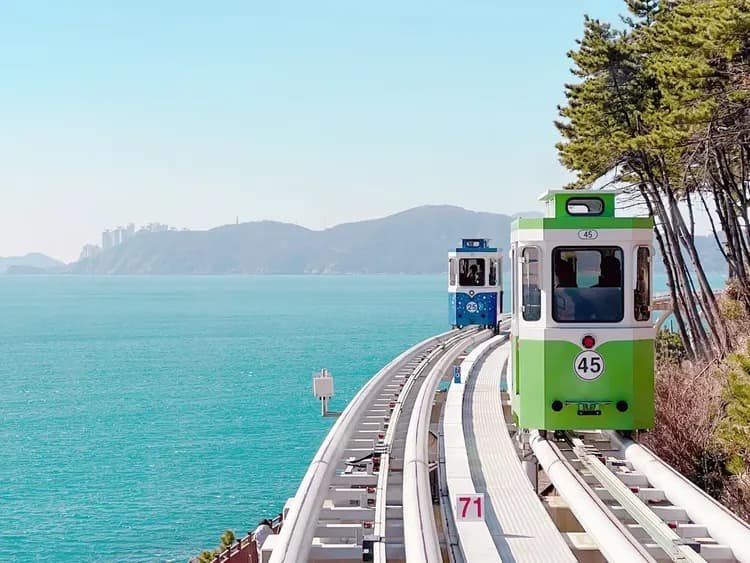
Why visit: Busan pairs city life with great beaches and coastal culture. Haeundae Beach is Korea’s most famous urban beach — long sand, surf, and a lively summer scene. Gamcheon Culture Village offers colorful stepped streets, murals and artisan shops with panoramic harbor views.
Top tips
- Summer = beach festival season; book accommodation well ahead.
- Try Busan specialties: raw fish (hoe), milmyeon (wheat noodles), and local seafood markets like Jagalchi.
8) Gyeongju — Bulguksa Temple & Silla heritage
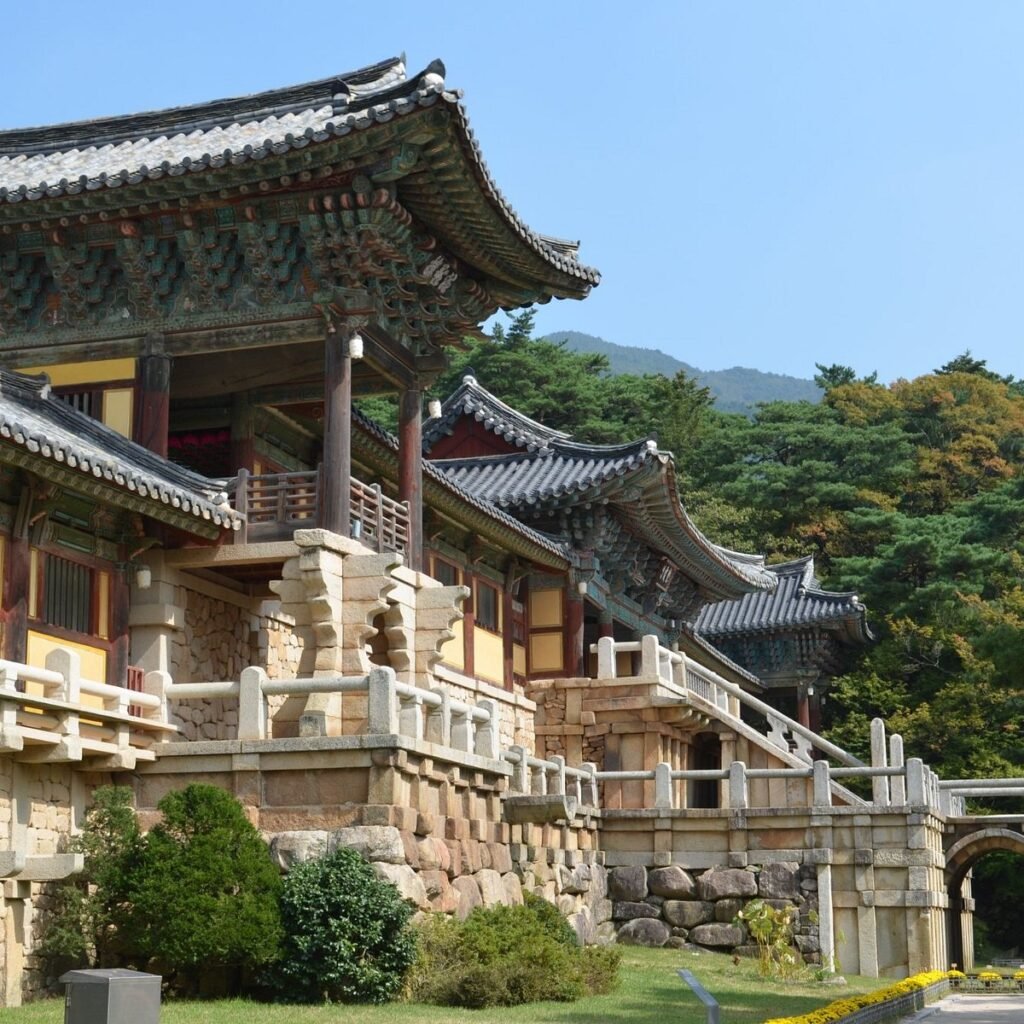
Why visit: Gyeongju was the capital of the ancient Silla Kingdom (57 BC–935 AD). Bulguksa Temple is an exquisitely preserved temple complex and a UNESCO World Heritage site, full of stone bridges, pagodas, and classic architecture. The nearby Seokguram Grotto and royal tumuli are must-sees.
Top tips
- Combine temple visits with Gyeongju National Museum and nearby tumuli parks.
- Visit in autumn for colorful foliage that beautifully frames the stonework.
9) DMZ/Panmunjom — history and geopolitics
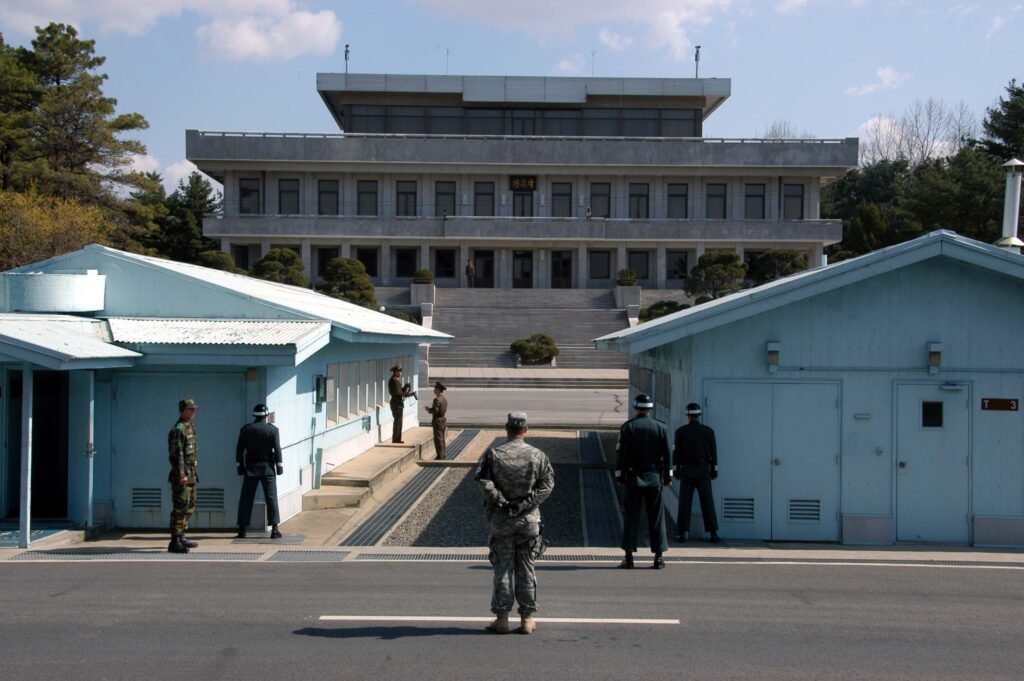
Why visit: The DMZ (Demilitarized Zone) is one of the most unique day-trip experiences from Seoul. Tours typically include observation posts, the Third Infiltration Tunnel, Dorasan Station and Panmunjom (the joint security area). Tours are strictly guided and require passport details at booking.
Top tips
- Book an official DMZ tour in advance through accredited operators (security checks apply).
- Carry your passport and dress respectfully — photography rules are strict in places.
10) Andong Hahoe Folk Village (or other cultural villages)
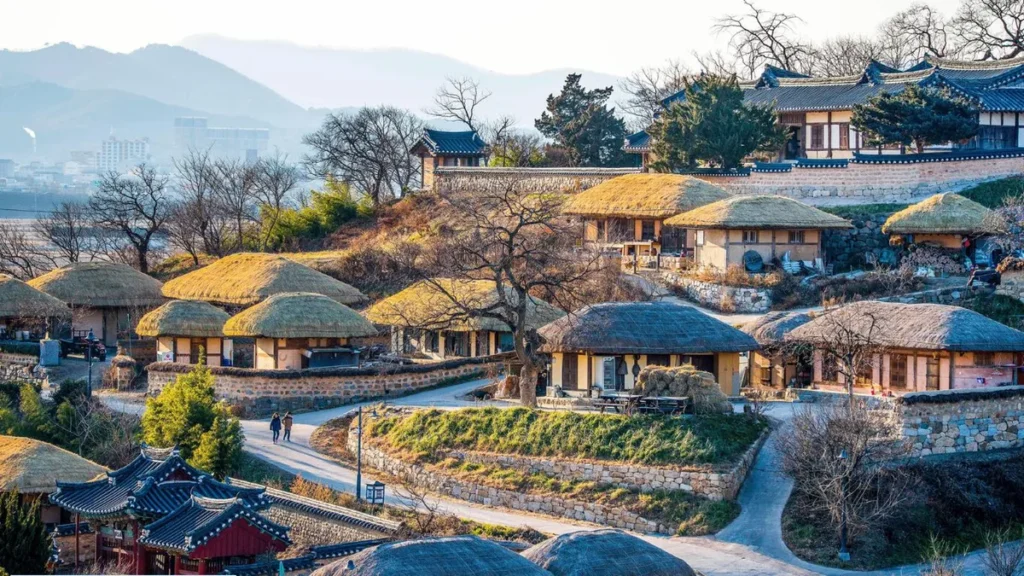
Why visit: For living, breathing traditional Korean village life, Hahoe in Andong preserves centuries-old thatched and tiled houses, mask dances and Confucian traditions. It’s a quieter, more contemplative cultural experience than the big cities.
Top tips
- Time your visit for local festivals (mask dance performances in certain months).
- Try local Andong jjimdak (braised chicken) — a regional specialty.
Suggested itineraries (3 practical options)
Short trip — 5 days (First-time)
Day 1: Seoul — Gyeongbokgung + Insadong + Myeongdong (night)
Day 2: Seoul — Bukchon + N Seoul Tower + Hongdae (evening)
Day 3: DMZ half-day tour + evening K-entertainment show or shopping
Day 4: Fly to Busan — Haeundae + Gamcheon + Jagalchi Market
Day 5: Day trip to Gyeongju (Bulguksa) or return to Seoul
Nature & island focus — 7 days (Jeju + Hallasan)
Day 1: Fly to Jeju — Seongsan Ilchulbong sunrise
Day 2: East coast (Seopjikoji, Udo island)
Day 3: Hallasan summit or guided hike
Day 4: Manjanggul Cave + beaches
Day 5–7: Return to Seoul + day trips
Cultural deep dive — 10 days
Seoul (3), DMZ & Suwon Hwaseong (1), Gyeongju (1), Busan (2), Andong/Hahoe (1), Jeonju or other cultural town (1) — wrap up in Seoul.
Practical travel tips & planning
Visa & entry: Check visa requirements for your nationality well before travel. Many countries enjoy visa-free entry or visa-on-arrival for short tourist stays.
Transport: Korea’s public transport is excellent: KTX high-speed trains, subways in major cities, intercity buses, and domestic flights to Jeju. Purchase a T-money (transport) card for city travel.
Connectivity & SIMs: Pocket Wi-Fi and prepaid SIMs/eSIMs are widely available at airports and online.
Money & tipping: KRW (Korean won) is the currency. Tipping is not common in Korea; good service is included, though high-end hotels and foreigner-facing tours may expect optional tips.
Language: Korean is the national language. English is commonly used in tourist areas, signage and transport hubs, but learning a few phrases helps.
Safety & etiquette: South Korea is generally safe. Show respect at religious sites, remove shoes where required, and follow photography rules at historic/cultural sites.
SEO & Google Discover friendliness (how this post is structured)
To make this article Google Discover and SEO friendly:
- Strong, descriptive title & meta description (above).
- Clear H1 and H2 headings for readability and indexing.
- Fast-scannable comparison table and stepwise itineraries for high engagement.
- Image carousel at the top (visual appeal increases Discover click-through).
- FAQs and practical tips for useful micro-content that often performs in Discover.
- Use schema (Article + FAQ) when you publish: include JSON-LD for the FAQ section and structured data for travel articles. (When publishing, ensure page loads fast and images are optimized for mobile.)
Affiliate & AdSense monetization tips (how to earn from this post)
- Affiliate links: Integrate relevant affiliate offers — travel insurance, flight booking engines, local tours (DMZ, Jeju hikes), and hotel booking affiliates (choose reliable partners). Add clear CTA buttons (e.g., “Book DMZ Tour”, “Reserve Jeju Sunrise Tour”).
- Product tie-ins: Recommend travel gear (comfortable shoes for Seongsan, daypacks, portable chargers) with affiliate links.
- Comparison widget: Include a “Best tours” product carousel (if your affiliate partner provides an API or widgets).
- AdSense: Place responsive ad slots above the fold (careful with UX), between sections and after the comparison table. Avoid too many ads that hamper readability—balance is key for Discover eligibility.
- Internal linking: Link to related posts (Seoul food guide, Jeju itinerary, Busan seafood guide) to increase session duration and ad impressions.
- Email capture: Offer a “Top S. Korea packing checklist” PDF in exchange for an email — great for retargeted offers.
Photography, images & mobile optimization
- Use high-quality hero images (compressed WebP or responsive JPEGs) with descriptive alt text such as “Gyeongbokgung Palace in spring – Seoul”.
- Mobile first: Google Discover prioritizes visual mobile content; ensure images have
widthandheightattributes and useloading="lazy"for below-the-fold images. - Add image captions and credit where required.
Safety & accessibility notes
- Include wheelchair access info where available (some older palaces/temples have limited access).
- Warn hikers about trail conditions and seasonal closures (Hallasan & Seongsan trails can be closed for weather). Confirm with local park offices. VISITKOREA – Imagine Your Korea
Frequently Asked Questions (FAQs)
Q1: When is the best time to visit South Korea?
A: Spring (April–June) and autumn (September–November) are ideal: mild weather, cherry blossoms in spring and colorful foliage in autumn. Summer is hot and humid (but great for beaches in Busan and Jeju). Winter offers skiing and clear skies, but some coastal activities may be limited.
Q2: How many days do I need to see the highlights?
A: For a taste of major highlights, plan 7–10 days (Seoul 3–4 days, Busan 1–2 days, Jeju 2–3 days). If you only have 4–5 days, concentrate on Seoul plus one day trip.
Q3: Are English tours available at major attractions like the DMZ and Gyeongbokgung?
A: Yes — many tours and guide services provide English. DMZ tours must be booked through authorized operators and require passport details. VISITKOREA – Imagine Your Korea
Q4: Are entry fees expensive?
A: Most palaces and temples have modest fees (a few thousand KRW). Natural attractions like beaches are free; national park trails are generally free but summit permits or certain sites may charge. Always check official sites for exact fees. VISITKOREA – Imagine Your Korea
Q5: Is Jeju worth visiting? How many days for Jeju?
A: Absolutely — Jeju’s volcanic scenery (Seongsan Ilchulbong, Hallasan, lava tubes), beaches and unique culture make it worth 2–4 days. If you want a relaxed pace with hikes, allow 3–4 days.
Q6: Is it safe to visit the DMZ?
A: Yes, it’s safe when visited on official guided tours; strict security protocols and regulations ensure visitor safety. Guided tours are the only legal way to enter some areas.
Q7: Can I wear a hanbok to enter palaces?
A: Yes — wearing a hanbok is popular and often offers free or discounted palace admission. Many rental shops exist near palace areas.
Quick checklist before you go
- Passport validity & visa check.
- Book DMZ and popular tours in advance.
- Reserve Jeju domestic flights early (especially in peak season).
- Pack layers — weather varies between coast and inland.
- Download local transport apps (KakaoMap / Naver Map) and have T-money for metro/bus.
Final pro tips (insider hacks)
- Early starts win: For sunrise at Seongsan, arriving 60–90 minutes before sunrise secures the best viewpoints and photo ops. VISITKOREA – Imagine Your Korea
- Hanbok photo hack: Many hanbok rental shops let you walk to Gyeongbokgung or Changdeokgung — great for photos and often reduces admission cost.
- Night markets: Explore night markets in Seoul (Myeongdong, Dongdaemun) and Busan (BIFF Square) for local street food and bargains.
- Local SIM or eSIM: Grab a data SIM at the airport kiosks to navigate easily and call local tours.
Sources & further reading
- Korea Tourism Organization (VisitKorea) — official travel information. VISITKOREA – Imagine Your Korea
- Lonely Planet — country and city travel guides. Lonely Planet
- Cultural Heritage Administration — Gyeongbokgung Palace history. Royal Cultural Heritage Administration
- Seongsan Ilchulbong listing & visitor info (VisitKorea / local Jeju pages). VISITKOREA – Imagine Your Korea
- Travel & temple guides for Bulguksa & Gyeongju.